Page Template Settings set the layout for pages that WordPress builds for you: the blog page, archives, search results and the 404 page. Open them at AppearanceCustomizePage Template Settings.
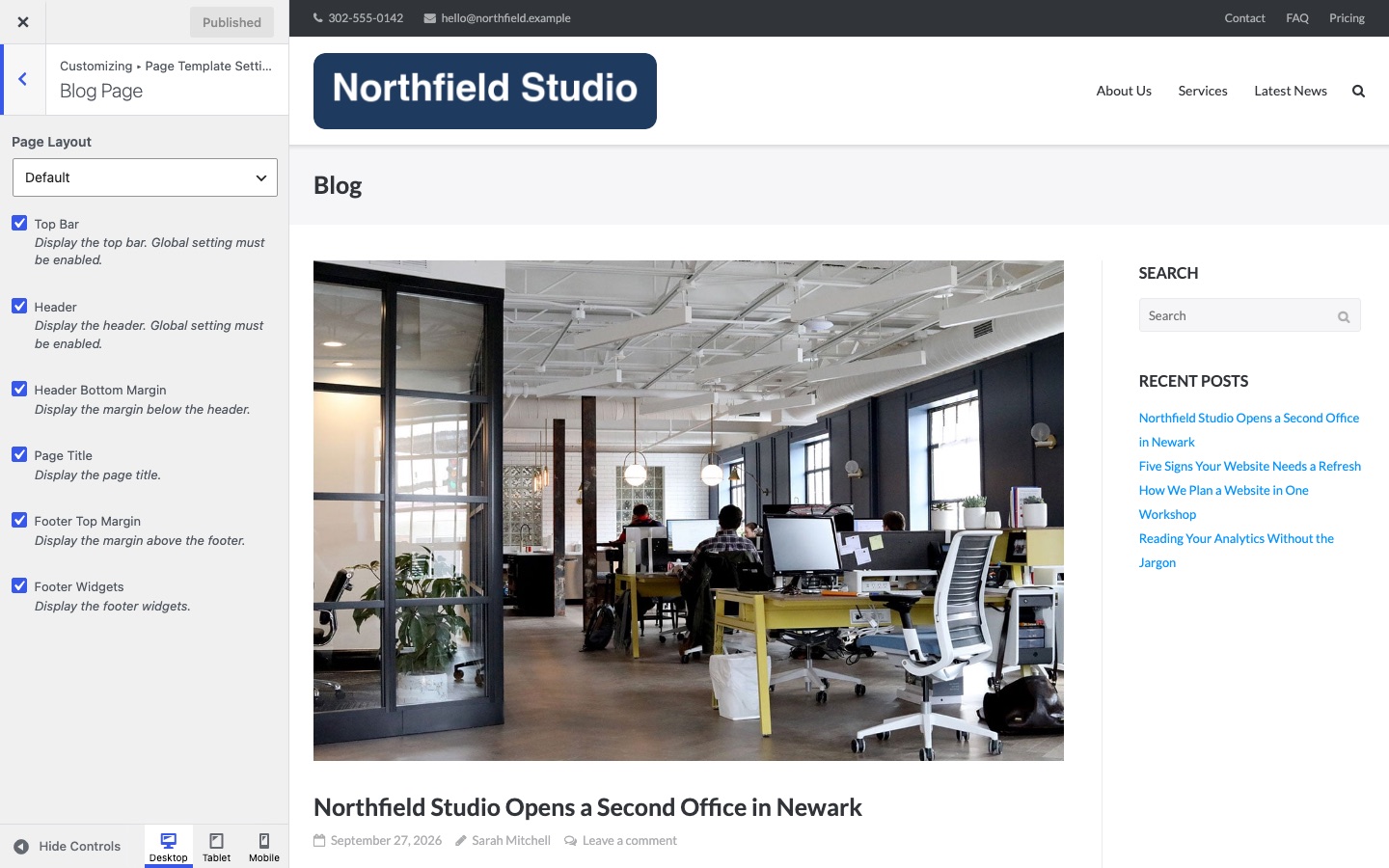
Choose a Page to Edit
- Open AppearanceCustomize.
- Browse to the page in the preview. Use your menu or a visible link.
- Open Page Template Settings. It lists only the section for the page you are viewing.
- Change the settings and click Publish.
Sections
- Blog Page: the page that lists your posts.
- Date Archives: archives by year, month or day.
- Author Archives: the posts of one author.
- Search Results
- Not Found: the 404 page.
- Type: one section for each post type that has an archive. The section name follows the post type, for example Type: Products.
- Taxonomy: one section for each public taxonomy. Categories and Tags are two of them. Custom taxonomies from plugins and child themes appear here too.
Every section has the same settings.
Settings
Page Layout
Choose one of four layouts. The default is Default.
- Default: the content with the sidebar.
- No Sidebar: the content without the sidebar.
- Full Width: removes the width limit of the content container and hides the sidebar.
- Full Width, With Sidebar: removes the width limit of the content container and keeps the sidebar.
Top Bar
Shows the top bar. The default is on. The global Top Bar setting in Theme Settings > Header must also be on.
Header
Shows the header. The default is on. The global Header setting in Theme Settings > Header must also be on.
Header Bottom Margin
Keeps the space below the header. The default is on.
Page Title
Shows the page title bar. The default is on. On the blog page, the Blog Page Title text in Theme Settings > Blog must not be empty.
Footer Top Margin
Keeps the space above the footer. The default is on.
Footer Widgets
Shows the footer widget area. The default is on. The bottom bar stays.